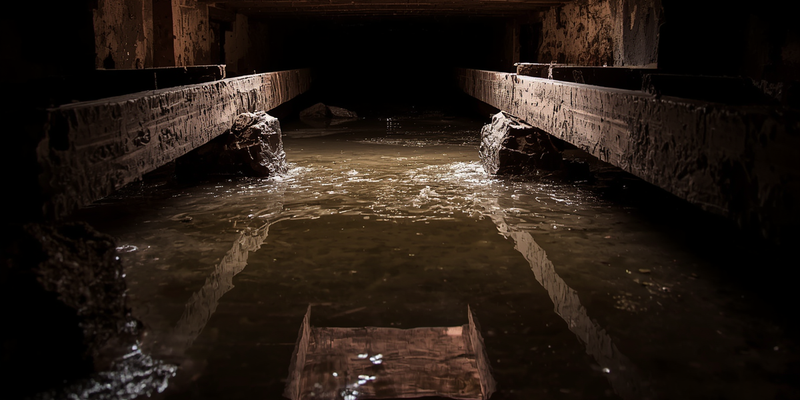
Maryland dirt holds water. Most of the Piedmont sits on clay, and the water table runs high down near the Chesapeake. Then a spring storm rolls through and drops two inches between lunch and dinner. I’ve crawled under enough houses from Hagerstown to Salisbury to know where all that water goes. It ends up under the floor joists.
A damp crawl space doesn’t have to kill your sale.
It does change how you sell and what you put in writing. It also decides which buyers can get a lender to the closing table. I’ve bought a lot of houses in this state, and the wet crawl space sale is one of the most common situations I run into. Sellers almost always handle it wrong the first time. Some panic and throw money at a repair that won’t move the price by a dollar. Others stay quiet, then watch the contract fall apart four days before settlement when the inspector emails photos of black mold on the sill plate.
There’s a middle road, and it starts with a flashlight and an honest look at what’s under there.
How Do You Assess Water Problems in a Crawl Space Before Selling?
Crawl space water isn’t one problem, and the cause drives each choice after it. Groundwater pushing through a block foundation wall during a wet week is a drainage issue. A slow drip from a supply line above the dirt is a plumbing repair that might cost a few hundred dollars. Condensation on cold ductwork in July comes from humidity. I’ve seen all three show up in the same inspection report, each with its own cost and its own talk with a buyer.
Go look for yourself if you can. Bring a bright light and a phone for photos.
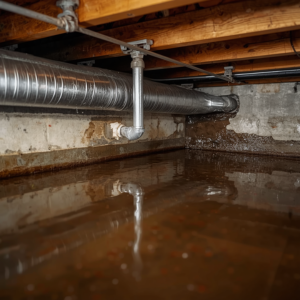
Standing water or soft mud is obvious. Chalky white crust on the foundation wall means water’s been moving through the block for a long time. Rusty duct straps and insulation sagging in sheets tell the same story. So do dark stains on the joists and a musty smell in the hallway above. Press a screwdriver into the sill plate near the footings. If it sinks in, you’ve got rot, and now you’re talking about structure as well as moisture. If the damage has spread up into the floors or walls, our guide to selling a house with water damage in Baltimore covers whether to repair first or sell as-is.
Next, buy a cheap hygrometer and leave it under the house for a week. It’s the first thing I check before buying a house with a crawl space. The EPA’s moisture control guidance says to keep indoor humidity below 60 percent, ideally 30 to 50 percent. A crawl space reading well above that is feeding mold, whether you can see it yet or not. That same page says to dry soaked materials within 24 hours if you can, and anything still wet after 48 hours may need to go.
After that, get it in writing. A licensed home inspector gives you a neutral report, and a waterproofing contractor gives you a quote. Get both, and get the quote from two or three companies, because crawl space estimates swing wildly in this state. One outfit near Annapolis will tell you the whole system needs replacing. Another will point at the downspouts dumping against the wall and call it an afternoon of work. Date every photo. You’ll want that record later.
Not up for chasing three waterproofing estimates? CR of Maryland I LLC can help with a cash offer on your house as it sits, and you don’t have to fix anything first.
What Are Maryland Seller Disclosure Rules for Crawl Space Water Issues?
Maryland’s form is shorter than most sellers expect. The Maryland Residential Property Disclosure and Disclaimer Statement runs four pages, and the State Real Estate Commission publishes it. Under Maryland Real Property § 10-702, a seller of a one-to-four-unit property gives the buyer one of two documents. One is a disclosure statement describing the condition you know about. The other is a disclaimer statement, which sells the house as-is with no representations.
You pick one. Not both.
The disclosure side of the form, revised August 3, 2026, has 25 numbered questions. Most get a Yes, No, or Unknown box. Question 4 asks whether the house has a basement or crawl space, then asks about water damage, leaks, or evidence of moisture, and whether there’s a sump pump. A separate question asks if the property has ever flooded. You answer from personal knowledge, and the form says you don’t have to investigate or inspect anything first.
Sellers get themselves in trouble right here. Picking the disclaimer doesn’t let you stay silent. Even on an as-is sale, you still have to disclose latent defects you actually know about, as Nolo’s rundown of Maryland disclosure obligations spells out. Those are material problems that a careful visual walkthrough wouldn’t catch and that pose a direct threat to health or safety. Plenty of people would read mold spreading under a bedroom floor that way. Water in a crawl space nobody sees without pulling a hatch and lying on their back is close to the textbook case.
My take, and some agents will disagree: disclose anyway, even on the disclaimer route. Write down what you know, attach the contractor quotes, and let the buyer price it in. A buyer who signs with your repair estimate in hand has a weak case for reopening it at inspection. You and the buyer both sleep better after closing.
Timing matters. The statement has to reach the buyer on or before the day they sign the contract. If it doesn’t, the buyer can cancel in writing any time before receiving it or within 5 days after. That right ends at settlement or move-in, whichever comes first. Your title company or closing attorney can confirm how it applies to your contract. Some transfers are exempt, such as certain estate and trust sales or a sale to a buyer who plans to tear the house down, so ask before you assume yours is one of them.
Which Crawl Space Repairs Are Worth Making Before You Sell Your House?
A rancher outside Westminster took on six inches of standing water every spring, and its owner had two contractor estimates in the five figures. Two days of regrading plus three downspout extensions dried it out, and it stayed dry through the next storm season. I’ve seen that same pattern on houses I’ve bought, where the real fix is smaller than the quotes.
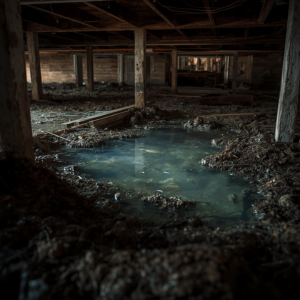
That won’t be every house, though it happens more often than the big quotes suggest. Most crawl space water arrives from outside, and outside fixes are cheap. Clean the gutters and run the downspouts well away from the foundation. Slope the soil so it drops away from the house over the first ten feet, and aim sprinkler heads somewhere else. Don’t spend a dime on anything inside until that’s done.
If water still shows up, you’re into real systems. That usually means an interior perimeter drain tied to a sump pump, sometimes with a dehumidifier sized for the space. Then comes the plastic. HomeAdvisor’s 2026 cost guide prices a 20-mil vapor barrier at roughly $0.50 to $0.70 per square foot. Full encapsulation goes further, running a heavy liner up the foundation walls and sealing the vents so the air stays dry. HomeAdvisor puts the national average cost at around $5,500, with most jobs landing between $5,000 and $15,000.
Never encapsulate a crawl space that still takes on bulk water. That’s a pool liner over an active leak, and the buyer’s inspector will peel back a corner and find it.
Rotted joists and a sagging floor sit in their own category. You fix them, or you disclose them and take the discount. A financed buyer’s appraiser is likely to flag structural wood decay, and the lender can hold the loan until somebody handles it. If your house is in Prince George’s County, we buy houses in Bowie, MD with damage like this left exactly as it is.
Early last year, I bought a split-level in Glen Burnie, in northern Anne Arundel, from a retired couple who’d inherited the place and never wanted to be landlords. Their last tenant left a chest freezer in the garage and a crawl space with a dead sump pump, and they were done with repair calls. We took it as it sat, plastic, water, freezer, and all.
If chasing contractors sounds worse than taking a slightly lower number, contact CR of Maryland I LLC. As a direct buyer, we’ll buy it in its current condition, and you’ll skip the repair cycle.
What Is Your Maryland Home Worth with Crawl Space Water Damage?
For years, I told sellers a wet crawl space knocked a fixed percentage off the price. I was wrong.
Buyers don’t discount by percentage. They start with the highest repair estimate their agent can dig up, add a cushion for the unknown, then take off more for the hassle of owning a project. I’ve watched a $9,000 remediation quote turn into $15,000 off. Fear is expensive.
Location moves the arithmetic more than the water does. Maryland’s median sale price was $443,155 in August 2026, up 1.9 percent from a year earlier, with a median of 43 days on market, per Redfin’s state market data. That statewide figure hides an enormous spread. Montgomery County homes sold at a $610,000 median over the three months ending September 2026. In Baltimore City, the median was $245,000 over the three months ending August 2026. Picture the same crawl space with the same quote in both places. That repair is a rounding error in Potomac and a sale-killer in Hamilton.
Buyer leverage has crept up, too. Nearly one in five Maryland listings, 19.8 percent, took a price cut in August 2026, up from 19 percent a year earlier. Softer demand gives a buyer who finds water under your house more room to push.
Financing moves the number most, and it does it quietly. FHA and VA appraisers check for standing water, excess moisture, and wood damage. A flag there can mean repairs before closing or no loan at all. Conventional underwriting varies by lender. Either way, moisture problems shrink your buyer pool to people with cash reserves or a renovation loan, and a smaller pool means a softer price. Our breakdown of appraiser required repairs in Maryland covers which defects tend to get flagged and what happens next.
One more call before you count on insurance. Most homeowner policies treat a sudden burst pipe very differently from groundwater seeping in over the years. Ask your carrier about your exact situation instead of guessing.
Whatever your crawl space looks like, we buy houses in Maryland, from the big cities to the small towns, and can give you a real number to weigh against repairing and listing.
How Can You Sell a House Fast with Water in the Crawl Space in Maryland?
“Can I just sell it wet?”
Yes. People do it every week in this state. You’ve got three realistic paths. You can list as-is with full disclosure and a price that reflects reality, repair first and list it clean, or sell directly to a cash buyer who prices the condition into the offer.
Run the timeline before you choose. Baltimore City listings took a median of 44 days to sell in the three months ending August 2026, and a financed settlement adds several more weeks after you ratify a contract. That realistically puts money in your hand around three months out, assuming the inspection doesn’t blow it up. Add repair time on the front end, and you’re looking at four or five months.
Cash changes that math. There’s no appraisal and no lender condition report. Nobody in underwriting is reading an inspector’s mold photos at 9 p.m. and getting nervous. Most of the cash sales I’ve closed in Maryland wrapped up in two to three weeks, since title work was the only real gate.
Before you call anybody, pull together your photos and contractor quotes. Add the age of the sump pump if there is one, plus a straight answer about how long the water’s been showing up. Buyers who do this for a living would rather hear bad news on the phone than find it with a flashlight, and I’ve walked enough basements to know. The offer goes down when we discover something you already knew about.
A man called me one Tuesday afternoon from Takoma Park. He apologized for being distracted, since he’d just moved his mother into assisted living that week. Her 1950s cape had a crawl space with a hand-dug drainage trench somebody cut in the 1980s, now half collapsed. He had no interest in learning what fixing it would cost, and with everything on his plate, I didn’t blame him. We bought it, he put the proceeds toward her care, and the whole thing took about three weeks.
Our team at CR of Maryland buys in this condition regularly, from Baltimore out to Towson in Baltimore County and down to Annapolis. We’ll also tell you straight whether listing would net you more.
Got your photos and contractor estimates together? Send them our way, and we’ll show you how to sell your Annapolis house faster, or a house in a nearby Maryland city, with an offer that already accounts for the water.
Frequently Asked Questions
How Much Does It Cost to Pump Out and Dry a Crawl Space?
Getting the water out is the cheap part. A pump, a few fans, and a day of labor clear most standing water, and restoration crews price that piece accordingly. Keeping it out is where the money goes, and those system costs are in the repairs section above.
Is Some Water Under a House Normal in Maryland?
Damp soil and seasonal humidity are common, especially after the kind of week we get in March and April. Standing water is a different story. So is water that comes back every time it rains. Dampness that dries out on its own is manageable, while a crawl space that holds water is telling you something about your grading, your gutters, or your water table.
How Much Does Moisture Damage Lower What My House Sells For?
There’s no fixed figure. Buyers price the repair plus the risk rather than the water itself. The same damage takes a smaller share of the sale price in a high-value county than it does in a modest neighborhood. Your bigger risk is losing financed buyers, which shrinks your pool before anybody makes an offer.
Is a Crawl Space a Hard Sell Around Here?
Not on its own. Thousands of Maryland homes sit on crawl spaces, from Eastern Shore cottages to postwar ranchers in the Baltimore suburbs. Buyers barely blink at a dry one with a clean vapor barrier. Condition drives the reaction more than the foundation type does. A crawl space with a working sump pump, decent plastic on the dirt, and no odor won’t worry most buyers or their inspectors.
What Should You Do Next About a Wet Crawl Space?
Maybe you’re sitting on a crawl space that fills every spring, and a decision you keep pushing to next month. You’ve got more room than you think. Get a quote from a waterproofing contractor so you know the real number. Then call an agent who sells in your zip code and ask what a fixed version of your house would list for. If neither path looks worth the trouble, get a cash offer and compare all three on paper. Nobody should talk you into anything on a first phone call. Find out what the house is worth in the condition it’s actually in, and when you’re ready, CR of Maryland I LLC is happy to help you decide from there.
Helpful Maryland Blog Articles
- Should I Remodel my Kitchen before Selling
- Can a Seller Refuse Repairs after Inspection
- Do I Need a Lawyer to Add a Name to a Deed in Maryland
- How Much Does an Estate Have to Be Worth to Go to Probate in Maryland
- Eviction Process for Landlords and Tenants in Maryland
- Cost to List on MLS in Maryland
- Selling a House with Water in the Crawl Space in Maryland