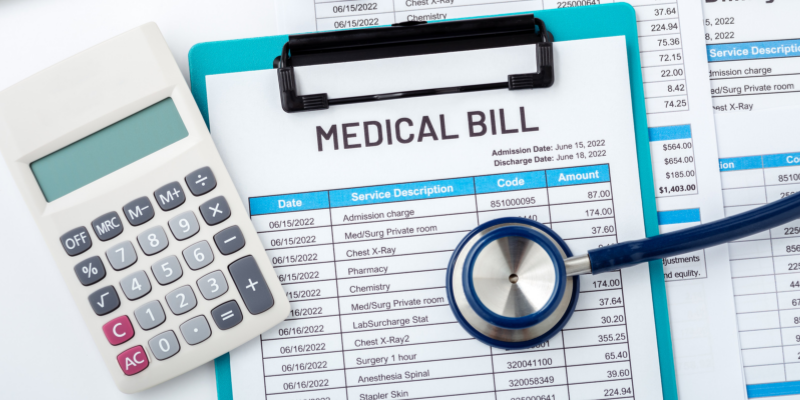
On October 1, 2025, Maryland stopped collectors from converting a medical debt judgment into a lien on your home. That same day, three bills took effect, rewriting how hospital debt is collected and reported, according to the Maryland Office of Financial Regulation. I buy houses around Baltimore. Hospital debt comes up at kitchen tables a lot, and the fear is nearly always that someone’s coming for the house. If you’re asking whether medical bills can take your house in Maryland, usually the fear outruns the law. Sometimes it doesn’t.
What Should You Do If You Receive a Hospital Bill You Cannot Pay?
You open the envelope, see the balance, and reach for the phone to set up a payment plan. Hold off. Once you start paying, the hospital tends to treat you as a paying account. Maryland hospitals must give free medically necessary care to patients whose household income sits at or below 200 percent of the federal poverty level. Having insurance doesn’t mean you’re knocked out if your coverage leaves part of the bill unpaid.
Apply first and pay later. Every Maryland hospital must use the Maryland Uniform Financial Assistance Application, a standard form established by the Health Services Cost Review Commission (HSCRC). Call the main number and ask for the financial assistance office. Once your completed application is in, the hospital has 14 days to decide. It has to suspend billing and collections while it does.
Gather pay stubs or proof of a job loss, benefit letters, your last tax return, bank statements, and proof of household size. Applying for a parent? Bring a power of attorney. Hospitals look at income at the time of service but can update it, so attach a short signed note on what changed. It can tip a borderline case.
Send it by certified mail, or hand it in and keep a date-stamped copy. Follow up in two weeks and write down who you spoke with. If you’re denied, ask for the reason in writing, since a missing document is often fixable on appeal. Complaints about hospital charges or aid decisions go to the HSCRC, and the Attorney General’s Health Education and Advocacy Unit can step in too.
Keep every envelope. These protections run on a clock that starts with the first bill, so postmarks and statement dates matter. A cheap accordion folder beats a pile on the counter.
If the medical bills are putting pressure on the house, CR of Maryland I LLC can make you a cash offer for the property and help you move forward without waiting for a traditional sale.
How Do You Verify the Details of a Hospital Debt?

Money you pay on a balance that wasn’t yours rarely comes back. Ask the hospital in writing for an “itemized statement” with procedure codes. Asking for “a copy of my bill” gets you another summary. Match the room-and-board lines to the nights you stayed, and look for charges after discharge, duplicate lab panels, or equipment you never saw. Then ask for the date the first bill went out. Nearly every protection below keys off that date.
The state runs an all-payer system. The HSCRC sets each hospital’s rates, and every payer pays them. A charge far above the approved rate deserves a question. If you’re insured, hold each explanation of benefits up against the statement. If the statement asks for more than the EOB’s patient-responsibility line, ask why.
When a collector calls, mail a written dispute you can prove you sent. Ask for the original provider, the date of service, and both the original and current balance. Don’t pay or agree to anything while you wait.
Hospital debts in Maryland carry a three-year limitations period. A 2025 law confirmed that “contract under seal” language doesn’t stretch it. Talk to a consumer attorney or Maryland Legal Aid before paying on a dormant balance. Adult children also aren’t on the hook for an adult parent’s hospital bill just because they signed admission paperwork. A 2021 state law says nobody else is liable unless they agree to take it on.
Ambulance companies, radiology groups, anesthesiologists, and the hospital may each bill separately, so check each account individually. A one-page ledger of providers, balances, collectors, and disputes keeps you from agreeing to something you don’t understand.
Can Medical Bills Take Your House in Maryland?
Not the house you live in, at least not over an unpaid ER bill. House Bill 428 bars a debt collector from using a medical debt judgment to put a lien on your primary residence. Hospitals were already barred from asking for one under the 2021 law. If you’re wondering whether medical bills can take your house in Maryland, the answer for the home you sleep in is no.
That shield covers your primary residence and nothing else. A rental, a beach place in Ocean City, or an inherited house you never moved into won’t get it. Joint ownership, a trust, or a deed still in a late parent’s name all deserve a lawyer’s review. The ban also won’t touch a lien you signed for yourself. If a lien is already recorded on your title, read how to sell a house with a lien in Baltimore, MD before you list.
Judgments still reach past your front door. A collector can attach bank accounts and garnish wages within legal limits, unless you’re in the protected group covered in the next section. A judgment on record can also slow a closing. If an account gets frozen, call Maryland Legal Aid or a consumer attorney that week to claim your exemptions, including federal protections for Social Security.
Your equity is often the real asset at stake. The statewide median sales price was $445,000 in August 2026, up 2.3 percent from a year earlier, according to Maryland realtors.
Long-term care is the real exception. Medicaid nursing home coverage follows its own estate rules, separate from debt collection. See an elder law attorney before you transfer a deed to a child.
Medical bills can’t take the house you live in, but missed property taxes or mortgage payments can. Don’t throw every dollar at a negotiable medical balance and fall behind on the bills that aren’t negotiable. Already behind? Call your servicer about loss mitigation, and ask your county about hardship programs. Some homeowners sell anyway because a smaller place fits life after an illness, and that’s fine. If selling makes sense, cash house buyers in Waldorf and the surrounding Maryland cities may be an option.
Does Maryland Require a Waiting Period Before Hospitals Can Sue You?

Yes. Under House Bill 268, part of the October 2025 package, a Maryland hospital can’t sue over medical debt under $500. For larger balances, it has to tell you that financial assistance is available and give you 240 days to apply. It can’t file a collection lawsuit during that window. A separate 2021 rule bars hospitals from garnishing wages of patients who are eligible for free or reduced-cost care. Eligibility is what counts there, so get an application on file even if you doubt you’ll qualify.
Should a collector call while your application is under review, tell them so in writing and ask them to pause. Copy the financial assistance office, since hospital collectors must follow its rules.
If you’re sued, don’t ignore it. A missed deadline can lead to a default judgment, and that opens the door to bank account attachment and wage garnishment. Once you respond, the hospital has to prove it. You can raise the limitations period or your eligibility for assistance as a defense. Billing errors count too. Maryland District Court self-help resources and Maryland Legal Aid see these cases all the time.
Bring your itemized bill, EOBs, application, and collector letters to court, since judges give real weight to paper. If a default judgment got entered because you never saw the papers, ask the clerk or a legal aid attorney how to get it set aside. If the case is still open when you need to move, it helps to know how selling a house with a pending lawsuit in Maryland works.
Collectors have a disclosure duty too. A complaint for a money judgment must say whether it’s for medical debt and, if so, list your primary residence; if yours doesn’t, show it to a lawyer.
Are There New Credit Reporting Bans for Maryland Medical Debt?
Your credit score isn’t the lever it used to be, and fear of a wrecked score pushes sellers into moves they regret. Maryland’s Fair Medical Debt Reporting Act, House Bill 1020, bans medical debt from consumer credit reports, collection records included. Nobody may use it to judge your creditworthiness, so a mortgage underwriter shouldn’t hold an old hospital account against you. One caveat: a 2025 federal ruling in Texas said federal law overrides state limits like these. It doesn’t bind Maryland courts, but keep checking your reports.
The ban only covers debt owed to providers and their agents. Put a hospital bill on a general credit card, and it becomes ordinary card debt that can be reported. Medical credit cards count as medical debt in Maryland, though some carry deferred interest that one late payment can trigger. If you’re handed that application at registration, ask about financial assistance first.
Still seeing old medical collections? Dispute them in writing with each bureau. Many show up under a collector’s name with no hint they’re medical, so read all three reports line by line. Attach anything that ties the account to a provider, like a hospital statement or collection letter. Then confirm the item came off instead of getting marked disputed. Do this well before mortgage underwriting so nothing surprises you at the closing table.
Don’t borrow against your house to pay a hospital bill. An unsecured medical balance in Maryland can’t reach your primary residence through a judgment lien. A home equity loan or cash-out refinance puts your house on the line. Thinking about a reverse mortgage for medical bills? Talk with a HUD-approved housing counselor before signing.
If selling the house would help, contact us for a cash offer and see what we can offer.
Options for Resolving Hospital Debt in Maryland

Even with good legal news, these calls circle back to the house. Maybe the stairs stopped working for you. Maybe the house sat empty through a year of treatment, and now the roof needs work on top of everything else. If repairs are the sticking point, you can sell your house in Maryland without fixing.
Listing works when the house shows well, and you can wait. Maryland realtors counted 16,897 active listings statewide in August 2026, 13.7 percent fewer than a year earlier. Tight supply helps a clean, updated house, while one needing work gives buyers plenty to haggle over. National estimates put a traditional sale’s total cost at 6 to 10 percent of the price, including Maryland’s transfer and recordation taxes.
A direct sale trades price for certainty. You skip showings and repairs, pick your closing date, and leave behind what you don’t want. For a family juggling a hospital and assisted living, certainty often beats a few extra thousand dollars. As investor house buyers in Germantown and other Maryland cities, we can provide a direct-sale option for sellers who want certainty.
To compare paths, set an agent’s estimate after repairs and commissions beside a direct offer. Then add a few months of mortgage, taxes, insurance, and utilities, which can eat into a higher list price. First, though, file the financial assistance application, request the itemized bill, and check the small-debt floor. Selling a house to pay a bill Maryland law would have cut or erased is the outcome I most want you to avoid. If you’d like a second look at the numbers, I’m glad to talk it through.
Frequently Asked Questions
Can an Unpaid Medical Bill Cost Me My Maryland Home, and How Do I Protect It?
A collector holding a medical debt judgment can’t put a lien on the home you live in. The real risk comes from debts you secure yourself, like a home equity loan, and from property that isn’t your primary residence. Apply for financial assistance first. Keep your mortgage and property taxes current, and don’t turn an unsecured medical bill into a debt backed by your deed.
How Long Before a Medical Debt Stops Being Collectible in Maryland?
Hospital debts fall under Maryland’s limitations period, which no contract can extend. Once that period runs, a hospital can’t win a collection suit, though a collector may still ask you to pay. A court judgment lasts much longer, so find out which one you’re facing before paying on an old account.
Can You Simply Refuse to Pay a Medical Bill?
You can, and Maryland’s reporting ban is meant to keep it off your credit. Above the small-balance floor and after the waiting period, a hospital can still sue. A judgment can then lead to bank account attachment and wage garnishment. Disputing the charges in writing and applying for financial assistance work better because either one can reduce or eliminate the balance.
If you’re weighing what to do with a Maryland house while hospital bills pile up, CR of Maryland I LLC is glad to walk through the numbers with you, whether or not selling ends up being the right move. Reach out to us at (443) 278-2743 whenever you’re ready. No pressure, no obligation, and no one calling you back twice a week afterward.
Helpful Maryland Blog Articles
- Should I Remodel my Kitchen before Selling
- Can a Seller Refuse Repairs after Inspection
- Do I Need a Lawyer to Add a Name to a Deed in Maryland
- How Much Does an Estate Have to Be Worth to Go to Probate in Maryland
- Eviction Process for Landlords and Tenants in Maryland
- Cost to List on MLS in Maryland
- Selling a House with Water in the Crawl Space in Maryland
- How Long Can I Leave My House Vacant in Maryland
- How Long Does a Real Estate Contract Last in Maryland
- Can Medical Bills Take Your House in Maryland