
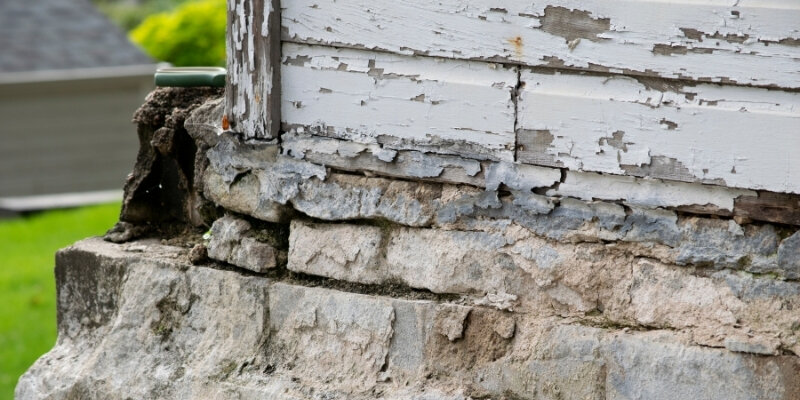
A crack in the basement wall stopped a sale cold in Catonsville last year. After the buyer’s lender walked away and the real estate agent went quiet, the seller was left holding a property they had no idea how to move. Sound familiar?
Selling a house with foundation issues in Maryland is entirely doable. Your path just looks different than a standard sale, and most sellers waste months chasing the wrong one.
Signs of Foundation Problems in Maryland Homes
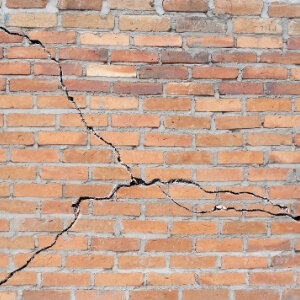
For a long time, I assumed foundation damage was always obvious. It rarely is. Signs tend to sneak up on you, and by the time homeowners catch them, the problems have often been spreading for years.
Doors that stick in humid summers aren’t always just swollen wood. Cracks running diagonally from window corners are a common early signal, especially in older Baltimore rowhouses and ranchers out in Harford County, where the soil shifts with the seasons. Gaps between walls and ceilings, floors that slope toward the center of a room, or basement walls that bow inward rather than standing flat (bowing is the one I never ignore), these are the things you want a professional to evaluate, not shrug off.
Crawl spaces hide a lot. If your home in Anne Arundel County has a crawl space, moisture under there can eat at footings for years without making a visible mark upstairs. A musty smell in a lower-level room is worth following up on, even if you can’t see water.
Last winter, the Reeves family came to me with an inherited property in Parkville, a 1960s rancher packed with thirty years of belongings and four siblings who all wanted a clean exit. Saturday morning, we opened the garage and found that the rear wall had been pushing outward for what looked like at least a decade. Nobody had noticed because the garage was full of furniture, old tools, and storage boxes stacked to the ceiling. The movement was not catastrophic, but it reshaped the sale strategy completely. Getting eyes on every corner of a house before you make any decisions is non-negotiable, especially in garages used for long-term storage.
Are you seeing any of these signs in your home right now? Catching them early gives you more options, not fewer.
Common Causes of Foundation Issues in Maryland
Why does Maryland seem to have so many foundation problems?
The state’s geology is varied enough to create multiple failure modes. Clay-heavy soils in the Piedmont region, which runs through Howard and Carroll Counties, expand when they absorb water and shrink when they dry out. That constant movement puts lateral pressure on foundation walls over the course of decades. Down on the Eastern Shore near Easton or Cambridge, the soil is sandier and more prone to erosion and settling, especially near tidal waterways and the Chesapeake Bay (saltwater proximity accelerates this noticeably).
Older construction compounds the problem. Pre-1950 masonry homes, common in Baltimore City neighborhoods like Hampden and Waverly, were often built without the drainage systems we use today. Hydrostatic pressure from poor drainage pushes water against the basement walls until the mortar breaks down or the walls crack.
Freeze-thaw cycles are another culprit. Maryland winters are mild enough that people forget how hard repeated freezing and thawing can be on unprotected concrete. A small crack fills with water, which freezes and expands, and suddenly, a hairline fissure becomes a structural concern by spring.
Tree roots near foundations, aging sewer lines that saturate the soil below footings, and poor grading that slopes toward the house rather than away from it all contribute to this. None of these causes is unique to Maryland. Still, the state’s combination of clay soils, coastal exposure, older housing stock, and variable winters puts more properties at risk than owners typically expect. A house that looked fine at purchase can start showing cracks within a few years.
First Steps After Discovering Foundation Damage
Get a structural engineer out to the property before you call a contractor who sells repairs.
Most sellers don’t take this seriously enough, and that tends to cost them. Repair contractors have a financial interest in telling you the problem is serious. A licensed structural engineer charges you for an objective opinion and nothing else. The report becomes an asset, something you can hand to buyers, their inspectors, and their lenders rather than fumbling through questions at the negotiation table.
The engineer’s report will tell you whether you’re dealing with cosmetic cracking (common in concrete block foundations after decades of minor settling) or actual structural compromise. Those are two very different conversations with buyers, and conflating them costs sellers money.
After the inspection, you have real information to make decisions with. Some sellers get the report and discover the damage is minor; a few thousand dollars and a drainage fix handles it. Others learn the repair scope is significant and decide that spending money before the sale doesn’t pencil out. Both outcomes are useful because they give you a number to work with, and that number is the only thing a buyer actually negotiates against.
Don’t skip this step to save the inspection fee. One assessment from a qualified engineer, typically $300 to $700 in Maryland, can save you from either over-investing in repairs that don’t move the needle on price or under-disclosing problems you didn’t fully understand.
Foundation Inspections for Maryland Home Sellers
Home inspectors and structural engineers hold different credentials, and lenders treat their reports differently.
A general home inspector will flag foundation concerns during a standard buyer’s home inspection and almost always recommend “further evaluation by a qualified structural engineer.” That recommendation triggers the buyer’s lender to require an engineer’s sign-off before approving the mortgage. If you haven’t already ordered that report yourself, you’re doing it reactively now, in the middle of a contract, under time pressure, with the buyer watching.
Sellers who order their own structural engineer report before listing have a real advantage. You control the narrative. You can accurately describe what’s wrong, show what’s already been addressed, and let buyers read the professional assessment rather than imagine the worst.
One thing worth knowing: lenders pay attention to how repairs are documented. A repair done by a licensed contractor with permits pulled and a structural engineer’s sign-off is a very different document from an undocumented repair done years ago. Mortgage lenders and their appraisers want a paper trail, so that folder of receipts and inspection reports you’ve been keeping matters at closing. Without one, the sale may stall at underwriting, even if the foundation looks fine visually.
Properties sold to conventional buyers with mortgages face higher scrutiny on foundation issues than properties sold to cash buyers. Cash investors and house flippers don’t require lender appraisals, so selling to a cash buyer removes the inspection-to-lender bottleneck. If you want to skip the back-and-forth, CR of Maryland I LLC works directly with sellers in this situation and doesn’t require traditional financing on their end.
Foundation Repair Costs in Maryland
Contractors quote everything from a few hundred dollars to tens of thousands, and both numbers can be accurate depending on what’s actually wrong. Here’s the real range.
Hairline cracks repaired with epoxy or polyurethane injection are the most affordable fix, usually running somewhere between $250 and $800, depending on the crack’s size and location. Drainage solutions and waterproofing for basement walls run higher, often landing between $1,000 and $4,000. Pier systems for severe settling are where costs get serious. Depending on how many piers the job requires, that scope can run from $1,500 to well above $15,000.
For Maryland properties, the broad midrange most sellers encounter, a combination of crack repair, waterproofing, and minor drainage work, falls somewhere in that $5,000 to $12,000 window. A real number you’ll hear from multiple contractors.
Here’s what the repair estimate doesn’t tell you: what it does to your sale price. Spending $8,000 to repair a foundation doesn’t automatically add $8,000 to your offer price. Buyers who see a repaired foundation still discount for the problem’s history. Some buyers walk away regardless of the fix because they don’t want the liability. The math works out differently than most sellers expect.
Also, county labor markets matter here. Contractors in DC-metro counties like Montgomery and Howard routinely price a job 20 to 35 percent higher than contractors on the Eastern Shore or in Western Maryland, largely because of wage pressure and longer commutes to job sites. The same scope of work costs significantly more in Bethesda than in Hagerstown.
Maryland Disclosure Laws for Foundation Issues

So you’ve got the repair estimate. Now the question becomes: what are you legally required to tell buyers?
Maryland law mandates that sellers of residential real estate complete a form called the Residential Property Disclosure and Disclaimer Statement, outlined in Md. Code § 10-702, which requires disclosure of conditions that could affect the property’s value or desirability. Foundation damage falls squarely within that requirement.
Maryland home sellers may disclose known defects or provide a buyer with a disclaimer regarding the property’s condition. The disclaimer path isn’t a free pass, though. Even when selling “as is,” sellers must still disclose known latent defects, defined as material defects a buyer would not reasonably observe through careful visual inspection that pose a direct threat to health or safety.
Foundation cracks that compromise structural integrity meet that definition. Hiding them or painting over water stains in a basement corner before a showing isn’t protected by a disclaimer. Actively concealing known issues is misrepresentation, and it can result in a buyer filing a lawsuit after the sale closes.
Even if you’ve already fixed a foundation problem, you should still disclose it, along with details about what repairs were made. Buyers and their attorneys have a way of finding repair records, and an undisclosed prior fix looks worse than the fix itself.
The practical takeaway: be transparent, document everything, and consult a Maryland real estate attorney if you’re uncertain where a specific condition falls on the disclosure spectrum. The law is designed to protect both parties, and working within it protects you from liability well after closing day.
Fixing Foundation Problems Before Selling: Is It Worth It?
Sellers always ask this, and the standard real estate advice is to fix what you can. The advice isn’t always right.
Repairs make sense in a narrow set of circumstances: the damage is minor, you have solid contractor relationships that won’t slow down your timeline, repair costs are low relative to the expected price lift, and you’re targeting conventional buyers who need a move-in-ready property. In higher-end neighborhoods like Ellicott City or Severna Park, where buyers have financing and specific expectations, a clean engineer’s report post-repair can make your listing more competitive.
But many sellers in Maryland don’t fit that profile. If the property is inherited, if repairs would take several months, if you’re carrying two mortgages, or if the damage is severe enough that buyers will still discount despite the fix, then spending money upfront may just delay the inevitable at a higher cost to you.
I’ve watched sellers pour money into foundation work, expecting to recover it at closing, only to finish the sale with net proceeds lower than if they’d sold as-is from the start. The repair absorbed cash, the timeline stretched, and the buyer still negotiated hard because of the property’s foundation history. Selling as-is to the right buyer can actually net more money when you factor in carrying costs, renovation expenses, and the lost time.
Ask yourself: Do I have the capital, the time, and the right buyer profile to make a repair investment worthwhile? If you’re uncertain on any of those three, talk through the as-is route first.
Pricing a House with Foundation Issues in Maryland
According to Redfin data, Maryland’s median home sale price as of May 2026 was $448,407, up roughly 2.4 percent from the year before. That statewide figure is your starting point, but a house with foundation problems doesn’t start at the median.
The discount buyers expect depends on three factors: the severity of the damage, the estimated repair cost, and the property’s location. In competitive zip codes like those near the Annapolis waterfront or Columbia town center, strong buyer demand softens the discount. In slower markets, buyers price in both the repair cost and a risk premium on top of it.
A rough framework most investors use: take the after-repair value of the home, subtract the repair cost, then subtract an additional 10 to 20 percent to account for carrying costs, risk, and profit margin. That’s the kind of offer a cash buyer or house flipper makes. It’s not personal. It’s arithmetic.
Traditional buyers at the MLS level often try to negotiate a credit rather than a price reduction, asking the seller to cover repair costs at closing rather than reducing the purchase price. The result is usually similar, but credits preserve the buyer’s financing structure, since lenders sometimes resist price cuts below appraisal value.
Pricing honestly from the start beats the alternative. Overpricing a foundation-damaged home, then watching it sit on the market for weeks while buyers wonder what’s wrong with it, burns your negotiating position. In Maryland, the median days on market was 45 days as of May 2026 per Redfin, already up six days year over year. A distressed property priced wrong sits much longer than that, and long days on market signal desperation to every buyer who sees it (and they all see the history).
Who Buys Houses with Foundation Problems in Maryland
A seller looking for cash home buyers in Dundalk, MD came to me with a 1970s split-level that two different buyers had walked away from after the home inspection. Their real estate agent was frustrated, the listing had gone stale, and the seller assumed nobody would touch it. Within two weeks of switching strategies, the home was under contract with one of the active cash house buyers in Baltimore, MD, proving that the right buyer pool makes all the difference.
Cash investors, house flippers, and direct home buyers routinely purchase properties with foundation issues. This segment of the market exists precisely because conventional buyers and their mortgage lenders can’t accommodate properties in this condition. Investors price in the repair, plan the renovation, and move quickly without the contingency complications that derail financed offers, so a seller with a cracked foundation gets a cleaner close from a cash buyer than from anyone else.
Real estate agents don’t always point sellers toward this option because their business model depends on MLS listings and the commissions they generate. That’s not a criticism; it’s just a structural reality of how the traditional real estate transaction works. Cash buyers operate outside that structure.
Hard money lenders and fix-and-flip investors focus on the property’s post-repair value rather than its current condition. That’s why they can make an offer on a house that a conventional buyer’s lender would reject outright. Property value after renovation is what matters to them.
CR of Maryland I LLC buys houses directly from Maryland homeowners, including properties with foundation damage, and handles the transaction without requiring the seller to make repairs. If traditional buyers have turned you down or want to skip the MLS process, a conversation with a company that buys houses in Maryland directly is worth it.
Selling a Maryland Home As-Is with Foundation Damage
A woman who needed to sell a house fast in Towson, MD reached out after her mother’s house had been vacant for eight months. The furnace had died, the basement had flooded twice, and she lived two states away. By the time we talked on a Thursday afternoon, she’d already fielded two offers from financed buyers that fell through at inspection. She went the as-is route instead, accepted a cash offer the following week, and closed within the month without setting foot in Maryland for anything beyond the final walkthrough.
Selling as-is means the seller makes no repairs, and the price reflects the property’s current condition. For foundation-damaged homes, this path is the one that actually closes. No lender required, no repair contingency, no engineer report demanded mid-transaction (cash buyers skip all of that).
Maryland’s disclaimer statement form, as discussed above, allows this approach while still protecting you legally, provided you disclose any known latent defects. The form doesn’t pretend the problems don’t exist; it simply establishes that the buyer is accepting the property in its present condition, with full knowledge of what’s been disclosed.
One common misconception: selling as-is doesn’t mean accepting a lowball offer with no negotiation. Cash buyers are competitive in Maryland right now, and multiple offers are possible even on a distressed property. Get at least two or three cash buyers to evaluate the home before committing, even informally. Comparing offers side by side gives you leverage because you’re not negotiating from a single number on the table, and it takes days, not weeks.
The as-is path moves faster. Without repair timelines, contractor schedules, permit delays, and lender review periods piling up, a sale to a cash buyer can close in a few weeks rather than the 3 to 4 months it takes a traditional financed sale in the current Maryland market. For sellers carrying costs on an empty property, that speed has real dollar value.
Insurance, Lending, and Appraisal Hurdles to Expect

Underestimating the insurance and lending complications is where sellers lose time they didn’t plan to lose.
Some homeowners’ insurance carriers in Maryland will flag a property with documented foundation issues and either exclude coverage or refuse to renew the policy. When a buyer’s real estate agent and lender discover that the property lacks standard insurance coverage, the transaction can stall before it even reaches the appraisal stage. If the foundation condition complicates your current insurance situation, address it upfront or factor it into your as-is pricing (get that documentation ready early).
Mortgage lending is the other hurdle. Conventional loans backed by Fannie Mae and Freddie Mac have property condition requirements, and foundation damage can render a property ineligible for standard financing. FHA loans are even stricter. This doesn’t kill the sale; it narrows your buyer pool to cash purchasers and hard money lenders. Knowing that upfront lets you market correctly and stop wasting time on showings for buyers whose lenders will never approve the sale.
Appraisal is another layer. Even if a buyer agrees to purchase the property, the lender’s appraiser may note the foundation condition and flag it as a condition of the loan, requiring repairs before the loan funds are disbursed. These mid-closing surprises are avoidable if you’ve done your homework on buyer type before accepting an offer.
Marcus Patel had been managing his father’s care at a senior facility in Columbia for most of the past year. The house, a split-level in Clarksville with a detached garage full of woodworking equipment, sat empty while Marcus balanced work, family, and medical appointments. By the time he was ready to sell, the foundation had minor diagonal cracking that a traditional buyer’s lender flagged as a condition requiring remediation before loan approval. Marcus didn’t want the delay. Working with a direct buyer, he closed on a Friday without touching the garage or the foundation, and the whole process took less than three weeks.
Understanding the full picture, insurance, lending, appraisal, and timeline, before you choose a path, lets you sell with clear expectations instead of discovering problems mid-contract. CR of Maryland I LLC can walk you through what the sale would look like on your specific property without any obligation.
Frequently Asked Questions
Is It Hard to Sell a Home with Foundation Issues?
It depends almost entirely on which buyer pool you’re targeting. Selling to a conventional buyer who needs a mortgage is difficult because lenders have strict property condition requirements, and foundation damage often triggers additional review or repair conditions before loan funds are disbursed. Selling to a cash buyer, investor, or direct home-buying company is a much smoother process. The sale still happens; you’re just matching the buyer to the property’s condition rather than fighting the financing system.
How Much Less Should You Expect to Receive for a House with Foundation Issues?
Buyers and investors typically start by subtracting the full repair cost from the home’s market value, then add a risk buffer. Depending on the severity of the damage and the competitiveness of your local market, the discount from full market value is often between 10 and 30 percent. In a strong market like Montgomery County or Anne Arundel County, the bottom end of that range is more realistic. In softer markets, buyers lean toward the higher end.
What Should You Not Bother Fixing Before Selling a House with Foundation Damage?
Cosmetic updates rarely recover their cost when the foundation is the elephant in the room. Fresh paint, new carpet, and updated light fixtures don’t move the needle for buyers who are already processing a foundation concern. Spend money only on repairs that directly affect the structural safety assessment or are explicitly required by the buyer’s lender. Everything else is money that buyers won’t price into their offer anyway.
What Is the Hardest Month to Sell a House in Maryland?
January and February are historically slow across most of Maryland. Fewer buyers are actively shopping, shorter days make showings awkward, and anyone who can wait tends to wait for spring. For a foundation-damaged home, seasonality matters less than it does for a move-in-ready property, since your buyer pool is mainly investors and cash buyers who operate year-round. That said, if you have flexibility, listing in March or April gives you access to the broadest pool of potential buyers, including any conventional buyers who might be open to purchasing with a repair credit.
If you’re sitting on a Maryland property with foundation issues and are not sure where to start, talking through your options costs nothing. CR of Maryland I LLC works with sellers across the state, no repairs required, no pressure, no obligation. Contact us whenever you’re ready.
Helpful Maryland Blog Articles
- Who Pays the HOA Fees at Closing in Maryland
- Can the Seller Back Out of a Contract in Maryland
- How to Do a Sale by Owner in Maryland
- Can You Sell Your House to the Bank in Maryland?
- How to Sell a Hoarder House in Maryland
- Divorce Home Appraisal in Maryland
- How to Sell a House with a Code Violation in Maryland
- How to Avoid Closing Costs in Maryland
- Selling Rental Property at a Loss in Maryland
- How to Sell a House With Termites in Maryland
- How to Sell Your Maryland House with Delinquent Property Taxes
- Average Closing Costs for Home Sellers in Maryland
- Documents Required To Sell Inherited Property In Maryland
- How To Sell A House With Foundation Issues In Maryland